.webp)
.svg)
.svg)

From D2C to B2B.
.webp)
.webp)

Project:
Service:
Channel:
Year:
Project:
mykraut
Service:
Consulting
Channel:
All
Year:
2023
Executive Summary:
Objective
Short-term stabilization and long-term realignment of the business model
Solution
Strategic repositioning & transformation towards a structured B2B sales model
Result
Over 550 new retail partners, rapid profitability, and a high level of predictability

.webp)
Initial Situation & Challenge:
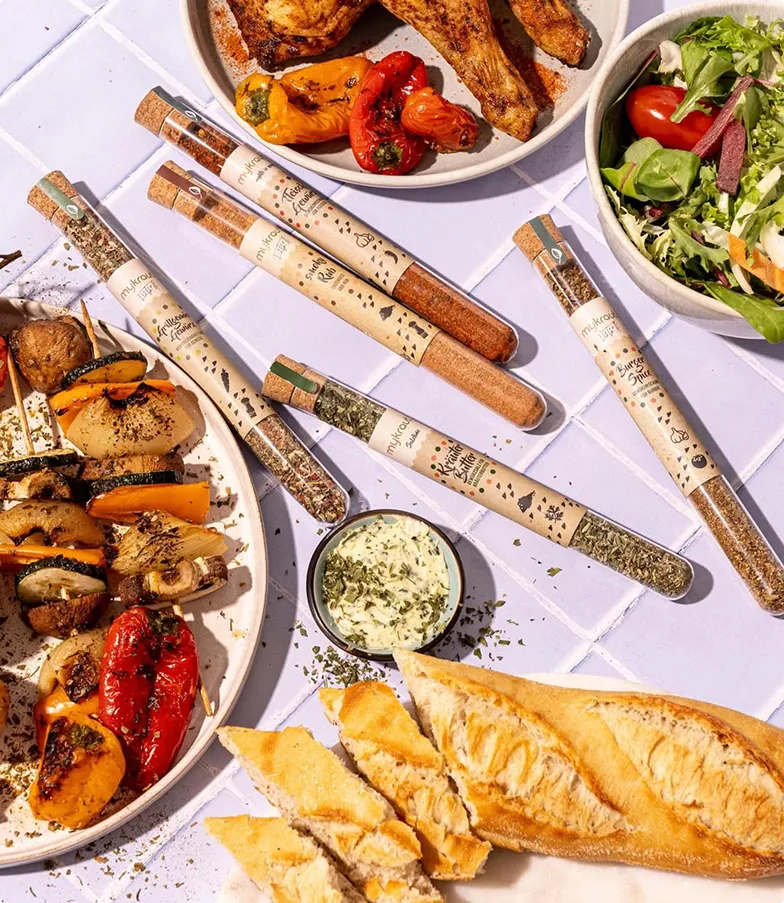
mykraut was founded in 2020 as an ambitious multi-channel brand in the food and spice segment, with the goal of changing the growing spice market. Instead of classic shaker jars, the brand relied on stylish test tubes, unique recipes, and a visual brand experience that clearly stood out from the competitive landscape at the time. With great attention to detail, the team pursued a clear vision: spices that not only impress in taste, but also aesthetically - and that should not be missing from any kitchen.
In 2021, we acquired a minority stake in mykraut at an early stage in which product, design, and team were already convincing, while the business model was still in the validation phase. It quickly became apparent that the low average order value posed a central challenge for the initially crucial online sales channel - especially in combination with the company’s growth ambitions, which relied heavily on performance marketing and new customer acquisition.
After our entry, we began working operationally with the founding team on all relevant levers. In addition to classic measures such as optimizing performance marketing, building a holistic newsletter setup to increase customer lifetime value, and sharpening the brand presence, logistics workflows and production processes were also revised with the aim of making the company more efficient and scalable. At the same time, we identified the “bread topping” as a true hero product, which generated high demand within a short period of time but was primarily purchased as a single item. Accordingly, from the very beginning of the collaboration, a strong focus was placed on increasing the average order value.
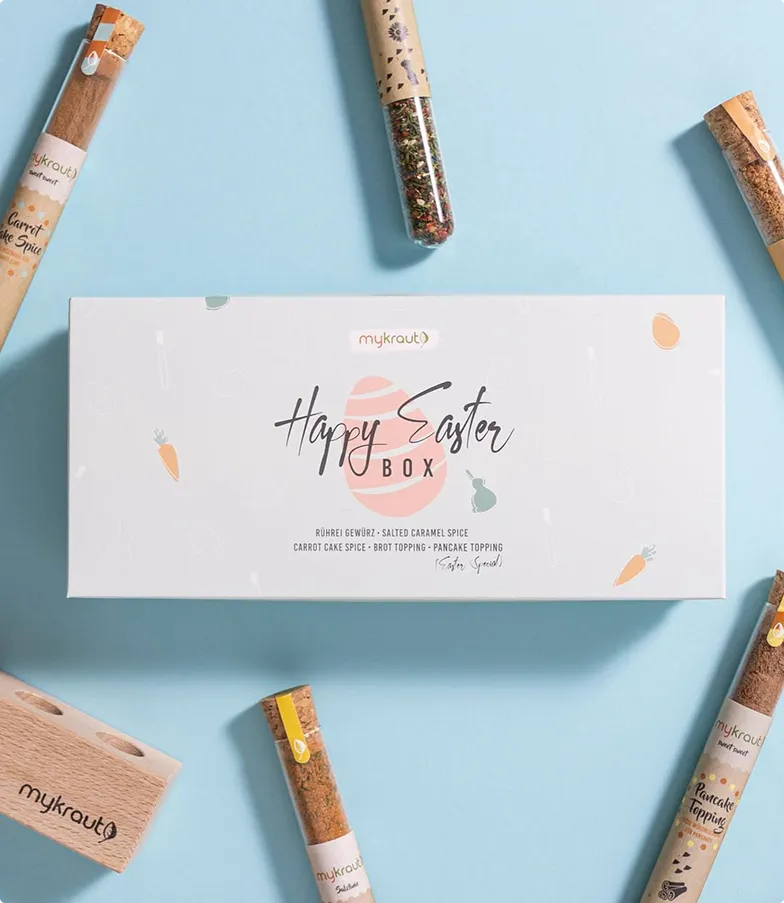
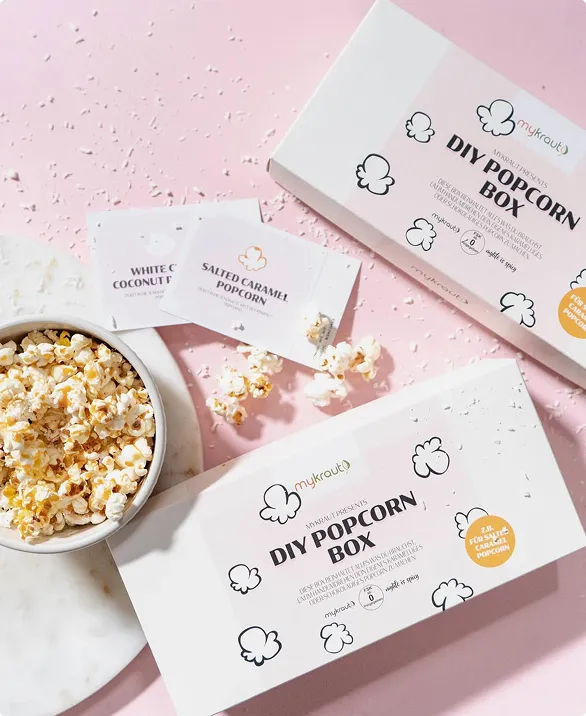
To achieve this, we developed a new, optimized webshop with a custom configurator, tested various bundling options, and implemented targeted upselling mechanisms. In parallel, we adjusted the product strategy: instead of single-item purchases, the focus increasingly shifted toward larger baskets through gift boxes, starter kits, refill packs, and seasonal formats such as an advent calendar.
In 2021, we acquired a minority stake in mykraut at an early stage in which product, design, and team were already convincing, while the business model was still in the validation phase. It quickly became apparent that the low average order value posed a central challenge for the initially crucial online sales channel - especially in combination with the company’s growth ambitions, which relied heavily on performance marketing and new customer acquisition.
After our entry, we began working operationally with the founding team on all relevant levers. In addition to classic measures such as optimizing performance marketing, building a holistic newsletter setup to increase customer lifetime value, and sharpening the brand presence, logistics workflows and production processes were also revised with the aim of making the company more efficient and scalable. At the same time, we identified the “bread topping” as a true hero product, which generated high demand within a short period of time but was primarily purchased as a single item. Accordingly, from the very beginning of the collaboration, a strong focus was placed on increasing the average order value.
To achieve this, we developed a new, optimized webshop with a custom configurator, tested various bundling options, and implemented targeted upselling mechanisms. In parallel, we adjusted the product strategy: instead of single-item purchases, the focus increasingly shifted toward larger baskets through gift boxes, starter kits, refill packs, and seasonal formats such as an advent calendar.

.webp)

.webp)

.webp)
However, despite an improved conversion rate, a growing community, and a significantly sharpened product strategy, growth did not occur at the desired pace. As a result, the founding team made a pivotal decision: entering retail through large-volume orders from well-known B2B customers, as well as sales to smaller B2B clients and delicatessen stores. Within a very short time, orders with six-figure volumes were secured. This sudden growth also brought a wide range of challenges: processes had to be redefined, the team expanded, and the requirements of B2B partners strictly adhered to.
As a consequence, revenue and order volume increased rapidly - as did process complexity, the cost structure required to fulfill orders, and dependence on large customers. Payment terms of up to 90 days, the pre-financing of large orders, and a significantly increased cost base due to the continued D2C business led to an over-complex and inflexible system. The massive revenue growth masked the risks associated with the multi-layered multi-channel approach. Shifts in ordering cycles, the seasonality of the D2C business, and fixed cost structures resulted in phases of extremely high liquidity requirements, which made pre-financing orders increasingly difficult and ultimately led to financial distress - despite an objectively excellent order situation.
As a consequence, revenue and order volume increased rapidly - as did process complexity, the cost structure required to fulfill orders, and dependence on large customers. Payment terms of up to 90 days, the pre-financing of large orders, and a significantly increased cost base due to the continued D2C business led to an over-complex and inflexible system. The massive revenue growth masked the risks associated with the multi-layered multi-channel approach. Shifts in ordering cycles, the seasonality of the D2C business, and fixed cost structures resulted in phases of extremely high liquidity requirements, which made pre-financing orders increasingly difficult and ultimately led to financial distress - despite an objectively excellent order situation.

Together with the team, a radical but necessary step was initiated: a complete strategic realignment and restructuring of the business model based on a clear sales strategy focused on small- to mid-sized B2B customers with regular ordering cycles. We supported mykraut comprehensively during this phase - from team reorganization and scenario planning to strategic decision-making and the redefinition of sales processes and offering structures.
The objective was clear: reducing complexity by eliminating volatile performance funnels and dependency on individual large B2B customers, shifting instead toward predictable revenues through owner-operated retailers, delicatessen stores, concept stores, and business customers with moderate payment terms. A model with fewer dependencies, predictable margins, and controlled scalability
The objective was clear: reducing complexity by eliminating volatile performance funnels and dependency on individual large B2B customers, shifting instead toward predictable revenues through owner-operated retailers, delicatessen stores, concept stores, and business customers with moderate payment terms. A model with fewer dependencies, predictable margins, and controlled scalability

.webp)

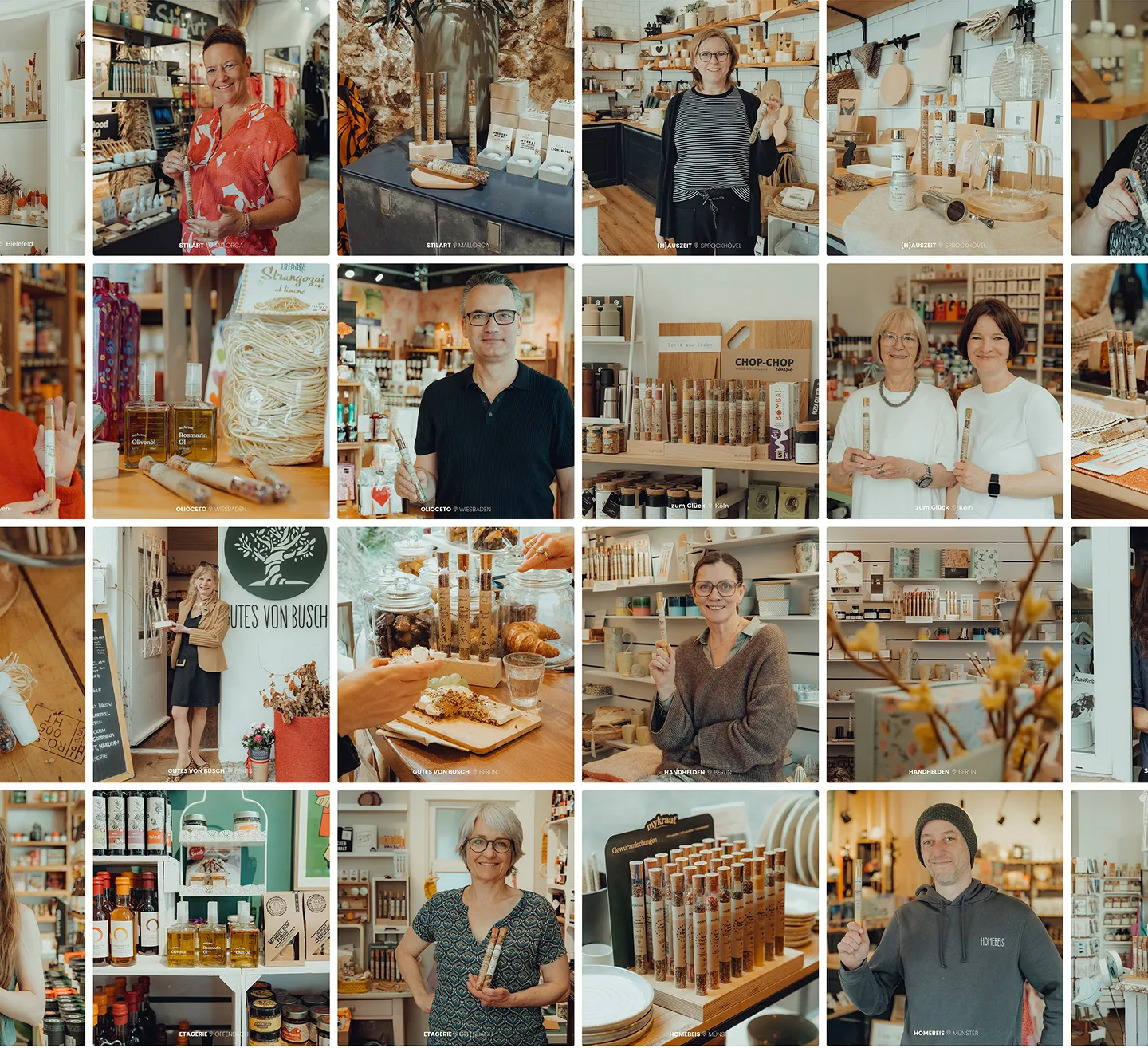
The strategic shift paid off. Within less than twelve months, mykraut was able to acquire over 550 new retail partners. While this new beginning came at the expense of short-term revenue growth, the significant reduction in fixed costs led to immediate profitability. Scaling was achieved primarily through campaign-style drops, a strengthened brand perception in retail, and a stable AOV on the B2B side. At the same time, the operational structure was consistently streamlined: fulfillment was fully outsourced, and the team transitioned to a 100% remote infrastructure.
The result: less complexity, higher efficiency, and significantly greater entrepreneurial predictability.
The result: less complexity, higher efficiency, and significantly greater entrepreneurial predictability.
.webp)
Today, mykraut is in a stronger position than ever. The product DNA has remained intact - but the business model has been fundamentally rethought. The consistent focus on a tailored B2B strategy has not only generated stable revenues, but also brought new energy and clarity to the organization. The transformation demonstrates that entrepreneurial flexibility and the courage to reassess past decisions are key to long-term success. Sometimes, taking one step back is necessary to move two steps forward.
.webp)
.webp)
.webp)
.webp)

.webp)
.webp)
.webp)
.webp)
.webp)
.webp)
.webp)
.webp)
.webp)
.webp)
.webp)
.webp)
.webp)
.webp)
.webp)
.webp)
.svg)
.webp)
.webp)